Category: Post
-
I love when someone leans into their hobbies. Fun!
-
You might think that the track record of UFO sightings in the past means that we should think there is some enduring phenomena – something really there that we don’t understand. In my view, the only enduring phenomena here are: Human error Instrumental error Hoaxes — Read on www.mindlessalgorithm.com/ufos-are-probably-nothing/
-
The Washington Post was killed because they changed their audience into something that didn’t have any long-term sustainability, while completely ignoring their real problem of the news itself not being worth paying for — Read on baekdal.com/newsletter/washington-post-postmortem–from-the-perspective-of-a-media-analyst
-
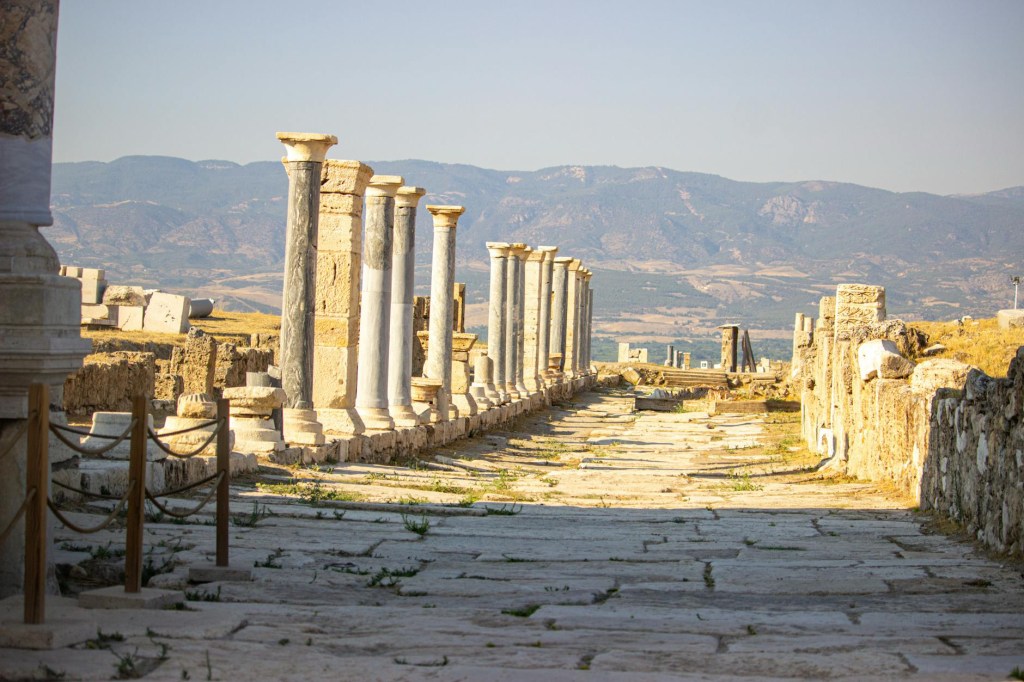
Rome invents the republic model of representative democracy. Rome builds on Greek experiments with democracy and philosophy, to invent and propagate the first republic system of government. Rome successfully runs this republic model for 500 years. Julius Caesar/Augustus overthrow the republic and make Rome an imperial power.
-
I’d been treating my brain like a hard drive: Transfer the file, and it’s there. But that’s not how it works at all, not even close. Learning is more like digestion. You don’t absorb more nutrition by eating faster. Past a certain rate, you just stop digesting, and the food you’re cramming in isn’t feeding…
-
you should always compare countries based on GDP PPP (Purchasing Power Parity) which erases…artificial distortion by adjusting for local price levels, giving you the true productive capacity of each economy and a much truer notion of domestic living standards. Useful. More here.
-
right now, the electromagnetic waves containing everyone’s information are passing through your room, through your body, through your brain. Every news article your neighbor reads on her phone, every TikTok video nearby high-schoolers watch, every private conversation between clandestine lovers, every kind of pornographic image the guy down the street downloads, they all reach and…
-
We have bad metrics as a society (X) Managers when a star employee leaves (X) “Everything Kevin Kelly knows about self-publishing” CAPITALISM GIVES ME THE FREEDOM TO PURSUE AS MANY SIDE GIGS AS I WANT TO PAY OFF MY INCREASING BILLS AND LOANS
-
“Imagine you are a historian of Rome. Please write twenty highly charged headlines about the time ranging from when Caesar crossed the Rubicon and returned to Rome until the time when Augustus took power. The headlines should be written in the style of CNN, written the way that CNN would cover politics”
-
I used to think of “knowledge projects” as involving a big mission, a big community, and a complex piece of software: the stuff of Wikipedia, Stack Overflow, or Genius….But the web is just as good for collaborations in the small. Not so long ago, I took a poem I wanted to understand better and sent…
-
Look for the repeating patterns of desire in moments when you are truly happy. Look for the arrangements of energy that compel you. Remember, you are looking for general shapes, like “the feeling of sharing confidences,” or “the knowledge that you have served your duty.” — Read on sashachapin.substack.com/p/the-two-kinds-of-desire-and-one-of
-
If we don’t recognize good technology when it happens, we can get cynical by missing out on the good things. Downloading maps to your phone is an example of good technology. Having a downloadable map, anywhere – available to your phone at a high fidelity of detail, which can be deleted when you don’t need…
-
They are powerful because it is seen as unseemly to mock them because they are rich and “running a company,” a kind of corporate fealty that I find deeply unbecoming of an adult. We are, at most, customers. We do not “owe them” anything. We are long past the point when any of the people…
-
the core idea was never that every crypto application would emerge all at once, or that finance wouldn’t come first. The core idea was — and remains — that blockchains introduce a new primitive: the ability to coordinate people and capital at internet scale, with ownership embedded directly into the system. — Read on x.com/cdixon/status/2019837259575607401
-
I am also somewhat-serious about this one: dating app swipes are too “cheap”, and don’t signal anything. In this app, each user would set a multiple-choice question, and in order to match with someone you have to get their question right. — Read on www.atvbt.com/dating-apps-i-would-like-to-see/
-
I want to automatically tag my Magic the Gathering cards, because tags really help with making fast commander decks. But it takes time, and I’ve probably tagged <3% of my cards. So I set out to build a solution in Replit.
-
I’m talking about interstellar travel. It will never be a thing. It turns out that starships exist on the exact same level of plausibility as wizards and it’s kind of weird that, as a culture, we assume the former will someday be reality. — Read on jasonpargin.substack.com/p/interstellar-space-travel-will-never
-

I was extremely happy with the Dolmenwood character generator I built with Replit. I then further updated the multi-prime classes (Magician, Friar, Knight) to adjust the mix, but I over indexed on it. So I decided to fix it.
-
In a thousand years from now, all the 11-dimensional charts at that time will show that “the singularity is near.” Immortal beings and global consciousness and everything else we hope for in the future may be real and present but still, a linear-log curve in 3006 will show that a singularity approaches. The singularity is…
-
I was frustrated with the existing Dolmenwood character generator, because it doesn’t allow me to iterate levels, and doesn’t show the levels on the character creation screen. I did like the backgrounds though. So, armed with a sense of purpose – a quest, if you may – I set out to see if I could…

